
The Australian food industry has changed dramatically over the last few years.
What if every order placed through a third-party food delivery platform is costing your restaurant more than you realize?
The way Australians order food has changed dramatically. Customers no longer want to call restaurants, wait on hold, or search through multiple websites. They expect a fast, mobile-first experience where they can browse menus, place orders, make payments, and track deliveries in just a few taps.
But while customer expectations have evolved, many restaurants are still heavily dependent on third-party delivery platforms.
Here’s the challenge:
Why keep paying commission fees on every order when customers could be ordering directly from your business?
For restaurant owners, cafés, takeaway businesses, cloud kitchens, and food franchises, this isn’t just a technology decision. It’s a growth decision.
“The restaurants winning in 2026 won’t simply serve great food. They’ll own the customer experience from the first click to the final delivery.”
A custom online food ordering app gives you control over your brand, customer data, promotions, loyalty programs, and revenue streams. More importantly, it helps turn one-time buyers into repeat customers.
At Vrinsoft Pty Ltd, we’ve helped Australian businesses build scalable digital solutions that improve customer engagement and streamline operations. Through our expert mobile app development services in Australia, we understand what it takes to create a successful online ordering system for restaurants that delivers real business value.
So, is your restaurant ready to compete on someone else’s platform—or build a digital ordering experience your customers will keep coming back to?
This guide covers everything you need to know about food ordering app development in Australia, from features and costs to trends and development strategies.
The Growth of Food Ordering Apps in Australia
Take a moment and think about your own habits.
When was the last time you called a restaurant to place an order?
Most customers today prefer ordering online because it is quicker, easier, and more convenient.
The demand for food ordering apps in Australia continues to grow as consumers increasingly rely on smartphones for everyday purchases. Whether ordering lunch during work hours, scheduling family dinners, or grabbing late-night takeaway, customers expect instant access to restaurants through mobile apps.
Here are some statistics that highlight the growing opportunity for restaurants across Australia:
- According to Grand View Research, Australia’s online food delivery market generated USD 9.7 billion in revenue in 2024.
- Grand View Research projects the market will reach USD 15.9 billion by 2030, growing at a CAGR of 8.1%.
- According to IMARC Group, mobile apps remain the preferred channel for online food ordering among consumers.
- IMARC Group forecasts Australia’s online food delivery market will exceed USD 21 billion by 2034.
These statistics show that online ordering is no longer a trend. It’s becoming the preferred way customers interact with restaurants. Businesses that invest in their own online ordering system for restaurants today are better positioned to increase direct orders, improve customer retention, and build long-term competitive advantages.
What Is an Online Food Ordering App?
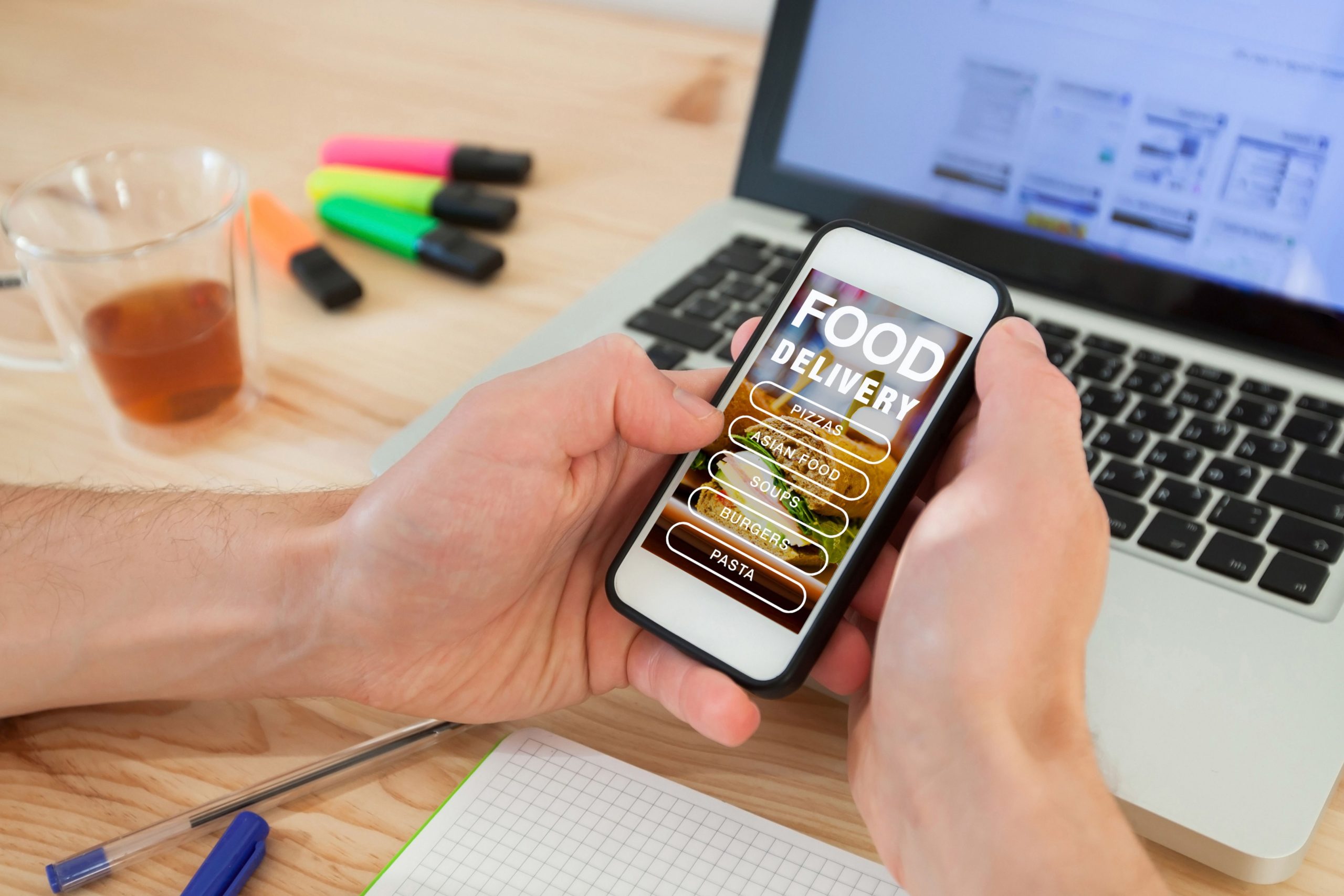
An online food ordering app is a mobile or web-based platform that allows customers to browse restaurant menus, place orders, make payments, and receive food through pickup or delivery services.
Unlike traditional ordering methods, a restaurant food ordering app creates a direct connection between your business and customers.
The app typically includes:
- Customer registration and profiles
- Menu browsing
- Order customization
- Secure online payments
- Real-time order tracking
- Push notifications
- Loyalty programs
- Reviews and ratings
From the restaurant’s perspective, the system provides tools for:
- Order management
- Menu updates
- Delivery coordination
- Customer management
- Promotions and discounts
- Business analytics
When combined together, these features create a complete online ordering system for restaurants that improves both customer experience and operational performance.
Types of Food Ordering Apps for Restaurants
Not every food business requires the same solution.
Before starting food ordering app development, it is important to understand which type of application best fits your business model.
A. Single Restaurant Ordering App
This type of online food ordering app is designed specifically for one restaurant brand.
Customers can browse the menu, place orders, make payments, and track deliveries directly through the restaurant’s branded application.
This option works particularly well for:
- Independent restaurants
- Cafes
- Takeaway outlets
- Local restaurant brands
The biggest advantage is complete ownership of customer data and branding.
B. Multi-Location Restaurant App
If your restaurant operates multiple branches across Australia, a multi-location app allows customers to select nearby outlets and place orders from the most convenient location.
This type of restaurant app development solution centralizes management while maintaining location-specific menus, pricing, and promotions.
C. Food Delivery Marketplace App
This model connects multiple restaurants with customers through a single platform.
Examples include large food delivery services where users can compare restaurants and order from various businesses within one application.
Marketplace platforms require advanced functionality and higher development investment.
D. Cloud Kitchen Ordering App
Cloud kitchens continue to grow throughout Australia.
Since these businesses operate without traditional dine-in facilities, an online food ordering system becomes their primary sales channel.
Cloud kitchen apps focus heavily on order management, delivery logistics, and customer retention.
E. Franchise Restaurant App
Restaurant franchises often require specialized applications capable of supporting multiple locations, centralized management, loyalty programs, and regional marketing campaigns.
Custom food ordering app development allows franchise operators to maintain brand consistency across all locations.
Why Australian Restaurants Need Their Own Online Ordering System
Many restaurant owners initially rely on third-party delivery platforms because they provide immediate access to customers.
However, over time, several challenges become apparent.
High commission fees. Limited customer ownership. Restricted branding opportunities. Dependence on external platforms.
This is why businesses increasingly invest in their own online food ordering app.
Let’s explore the key benefits.
1. Reduce Third-Party Commission Costs
One of the biggest frustrations restaurant owners face is paying significant commissions on every order.
These fees can quickly impact profit margins.
With your own restaurant food ordering app, customers place orders directly through your platform, reducing dependency on external services and helping retain more revenue.
Over time, these savings can significantly outweigh the initial development investment.
2. Build Stronger Customer Relationships
How much do you really know about customers ordering through third-party platforms?
In many cases, very little.
When customers order directly through your online food ordering system for restaurants, you gain valuable insights into:
- Ordering habits
- Favorite menu items
- Purchase frequency
- Customer preferences
- Geographic trends
This data enables personalized marketing and stronger customer engagement.
3. Improve Customer Retention
Acquiring new customers is important. Keeping existing customers is even more valuable.
A custom online food ordering app allows restaurants to implement:
- Loyalty programs
- Reward points
- Exclusive discounts
- Referral campaigns
- Personalized offers
These features encourage repeat orders and improve long-term customer value.
4. Strengthen Your Brand Identity
Third-party platforms often place restaurants alongside dozens of competitors. A dedicated food ordering app allows your brand to remain front and center.
Every interaction reflects your business identity, including:
- App design
- Branding
- Promotions
- Customer communication
- User experience
This helps build stronger brand recognition and customer trust.
5. Increase Operational Efficiency
Manual order processing often creates bottlenecks.
An online ordering system for restaurants automates many routine tasks, including:
- Order confirmations
- Payment processing
- Delivery assignments
- Inventory updates
- Customer notifications
This reduces human errors and improves overall efficiency.
6. Generate More Direct Orders
Perhaps the biggest benefit is creating a sustainable source of direct revenue.
Instead of competing for visibility on crowded marketplaces, restaurants can market their own food ordering apps in Australia through:
- Social media
- Email campaigns
- SMS promotions
- Loyalty programs
- QR code ordering
Over time, direct orders become a valuable asset for business growth.
How Restaurants Are Using Food Ordering Apps to Increase Revenue
Imagine two restaurants operating in the same suburb.
The first relies entirely on third-party delivery platforms. The second has invested in custom food ordering app development.
Both attract customers. Both serve quality food.
However, the second restaurant has additional advantages.
They can:
- Promote exclusive in-app discounts
- Encourage repeat purchases through rewards
- Send targeted push notifications
- Launch seasonal campaigns instantly
- Collect customer feedback directly
- Analyze customer behavior
As a result, they often generate higher customer lifetime value and stronger profit margins. This is why many hospitality businesses are prioritizing restaurant app development as part of their long-term digital strategy.
The question is no longer whether customers prefer mobile ordering. They already do.
The real opportunity lies in providing an ordering experience that keeps them engaged with your brand instead of someone else’s platform.
Essential Features of a Restaurant Food Ordering App
The success of an online food ordering app depends heavily on the features it offers.
Customers expect speed, convenience, and a smooth experience from the moment they open the app until their order arrives. At the same time, restaurant owners need tools that simplify operations and help manage growing order volumes.
If you’re planning food ordering app development, these are the features you should prioritize.
A. Customer Features
- User Registration and Profile Management
Customers should be able to sign up using email, mobile numbers, or social media accounts. A personalized profile allows users to save addresses, payment methods, and order history for faster future purchases.
- Smart Menu Browsing
A restaurant food ordering app should make it easy for customers to browse menus, search for dishes, filter by categories, and view detailed descriptions with images.
- Order Customization
Customers often want modifications such as extra toppings, dietary preferences, or ingredient changes. Flexible customization options improve customer satisfaction and reduce ordering errors.
- Multiple Payment Options
A modern online ordering system for restaurants should support credit and debit cards, digital wallets, Apple Pay, Google Pay, Buy Now Pay Later services, and cash on delivery (where applicable).
- Real-Time Order Tracking
Customers appreciate transparency. Real-time order tracking helps them monitor order preparation, dispatch, and delivery status.
- Push Notifications
Push notifications keep users informed about order confirmations, delivery updates, promotions, new menu launches, and loyalty rewards.
- Ratings and Reviews
Feedback features allow customers to share experiences and help restaurants continuously improve service quality.
B. Restaurant Management Features
A successful online food ordering system for restaurants requires powerful backend capabilities.
- Order Management Dashboard
Restaurant staff should be able to view, accept, modify, and manage incoming orders from a centralized dashboard.
- Menu Management
Restaurants frequently update menus, pricing, availability, and promotional offers. The system should allow instant updates without requiring technical expertise.
- Inventory Management
Integration with inventory systems helps restaurants monitor ingredient availability and avoid accepting orders for unavailable items.
- Customer Relationship Management
A built-in CRM helps track customer preferences, purchasing patterns, and loyalty program participation.
- Reports and Analytics
Data-driven insights help restaurants identify best-selling menu items, peak ordering times, customer demographics, revenue trends, and marketing performance.
- Delivery Management Features
If your business handles deliveries internally, delivery management becomes essential.
- Driver Assignment
The system should automatically assign deliveries to available drivers based on location and availability.
- GPS Navigation
Integrated maps and GPS routing help drivers find the fastest routes and improve delivery efficiency.
- Delivery Status Updates
Drivers can update order statuses in real time, keeping customers informed throughout the delivery process.
- Performance Tracking
Managers can monitor delivery times, completed orders, driver efficiency, and customer feedback.
Also Read: Restaurant Management Software Development: Types, Features, Process, and Costs
Food Ordering App Development Process
Building a successful restaurant food ordering app requires careful planning and execution. Here’s how the process typically works.
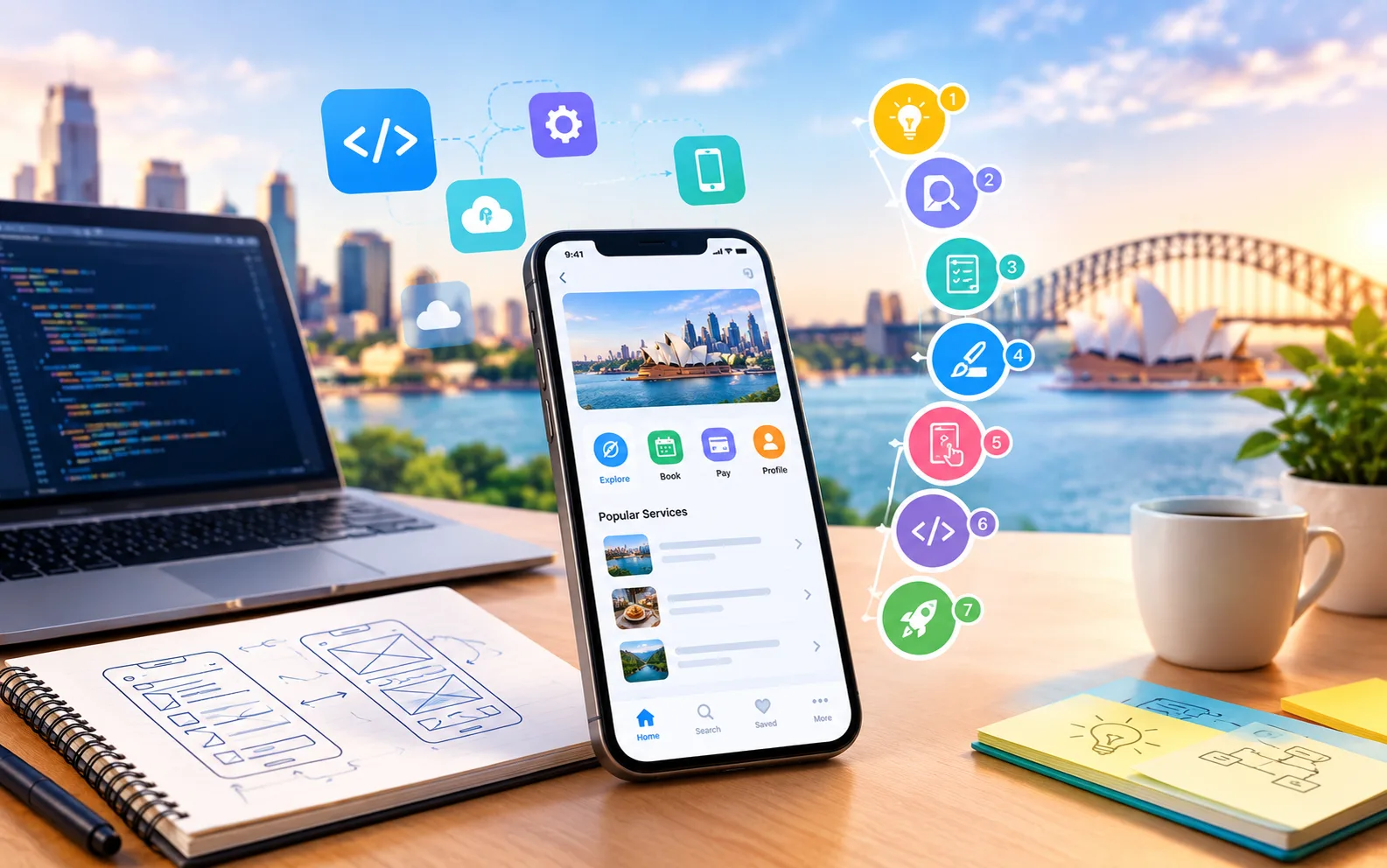
Step 1: Business Analysis and Market Research
Before development begins, businesses must understand:
- Target audience
- Competitor landscape
- Customer preferences
- Business goals
- Revenue model
This phase lays the foundation for a successful product.
Step 2: Define Features and Scope
Once the requirements are clear, the development team defines:
- Core features
- User journeys
- Integrations
- Technical requirements
- Project timeline
This helps prevent scope creep and keeps development aligned with business objectives.
Step 3: UI/UX Design
User experience plays a major role in customer retention.
Designers create wireframes, prototypes, and interfaces that ensure:
- Easy navigation
- Fast ordering process
- Consistent branding
- Mobile responsiveness
A well-designed online food ordering app can significantly increase conversion rates.
Step 4: Development
During this stage, developers build:
- Customer-facing applications
- Restaurant management panels
- Admin dashboards
- Delivery management modules
- APIs and integrations
The goal is to create a secure, scalable, and high-performing platform.
Step 5: Testing and Quality Assurance
Comprehensive testing ensures the application functions smoothly across devices and operating systems.
Testing typically includes:
- Functional testing
- Performance testing
- Security testing
- Usability testing
- Compatibility testing
Step 6: Launch and Deployment
Once testing is complete, the app is deployed to:
- Apple App Store
- Google Play Store
- Cloud infrastructure
Businesses can then begin marketing and customer onboarding activities.
Step 7: Maintenance and Enhancements
Successful food ordering apps in Australia continue evolving after launch.
Regular updates may include:
- Feature improvements
- Security updates
- Performance optimization
- User feedback implementation
- New integrations
Also Read: How to Develop an App Idea: From Concept to Launch in the Australian Market
Technology Stack for Food Ordering App Development
Choosing the right technology stack impacts scalability, security, and long-term performance.
The ideal stack depends on your business goals, budget, and future scalability requirements.
A modern restaurant app development project may include:
| Component | Technologies |
|---|---|
| Mobile App Development | Flutter, React Native, Swift, Kotlin |
| Frontend | React.js, Angular |
| Backend | Node.js, Laravel, Django |
| Database | PostgreSQL, MySQL, MongoDB |
| Cloud Infrastructure | AWS, Microsoft Azure, Google Cloud |
| Payment Integration | Stripe, PayPal, Square |
| Maps and Tracking | Google Maps API, Mapbox |
| Push Notifications | Firebase Cloud Messaging |
How Much Does Food Ordering App Development Cost in Australia?
One of the most common questions restaurant owners ask is:
“How much does it cost to build an online food ordering app?”
The answer depends on several factors, including app complexity, features, integrations, and development requirements.
Estimated Development Costs
| App Type | Estimated Cost (AUD) |
|---|---|
| Basic Food Ordering App | $15,000 - $30,000 |
| Medium Complexity App | $30,000 - $70,000 |
| Advanced Enterprise Solution | $70,000 - $150,000+ |
Factors Influencing Cost of Food Ordering App Development Cost
Several variables influence the final budget:
- Number of features
- Mobile platforms (iOS, Android, or both)
- Custom UI/UX design
- Third-party integrations
- Real-time tracking functionality
- AI-powered features
- Security requirements
- Ongoing maintenance
While cost is important, businesses should focus on long-term value rather than simply choosing the lowest development quote.
Also Read: How Much Does It Cost to Develop a Mobile App in Australia?
Emerging Trends in Food Ordering Apps in Australia
The restaurant industry continues to evolve rapidly.
Businesses investing in food ordering app development should consider future-ready features that improve customer experiences and operational efficiency.
AI-Powered Recommendations
Artificial intelligence can analyze customer behavior and suggest personalized menu items, increasing average order value.
Voice Ordering
Voice assistants and conversational interfaces are making ordering faster and more accessible for customers.
QR Code Ordering
Many restaurants now use QR-based ordering systems that allow customers to place orders directly from their tables.
Contactless Payments
Customers increasingly prefer secure, touch-free payment experiences.
Loyalty Automation
Automated rewards programs encourage repeat purchases and improve customer retention.
Predictive Analytics
Advanced analytics help restaurants forecast demand, manage inventory, and optimize staffing requirements.
Hyper-Personalization
Modern online ordering systems for restaurants can deliver highly personalized offers based on customer behavior and preferences.
Why Choose Vrinsoft Pty Ltd for Food Ordering App Development in Australia?
If you’re planning to build an online food ordering app, partnering with an experienced development team can help you reduce risks and accelerate time to market.
At Vrinsoft Pty Ltd, we help restaurants, cafes, cloud kitchens, takeaway businesses, and food franchises build scalable digital ordering solutions tailored to their operational requirements.
With over 16 years of industry experience, 2,000+ successful projects delivered, and 900+ satisfied clients worldwide, our team understands how to create mobile applications that deliver measurable business outcomes.
Our restaurant app development services in Australia include:
- Business analysis and consultation
- UI/UX design
- Custom mobile app development
- Online ordering system development
- Payment gateway integration
- Delivery tracking solutions
- Cloud infrastructure setup
- Ongoing maintenance and support
Whether you’re launching a new restaurant brand or replacing an expensive third-party ordering platform, we can help you build a powerful solution that supports long-term business growth.
Looking for a Trusted Custom App Development Company?
At Vrinsoft Pty Ltd, we specialize in food ordering app development, restaurant app development, and custom digital solutions designed for Australian businesses.
Our experienced team works closely with restaurant owners to create secure, scalable, and feature-rich online food ordering apps that improve customer engagement and streamline operations.
From strategy and design to development, deployment, and ongoing support, we deliver end-to-end restaurant app development services in Australia tailored to your business goals.
Contact Vrinsoft Pty Ltd today to discuss your project and discover how a custom online food ordering app can help your restaurant grow in 2026 and beyond.
Frequently Asked Questions About Food Ordering App Development in Australia
Explore answers to common questions about food ordering app development and features.
Q1: What is an online food ordering app?
An online food ordering app is a digital platform that allows customers to browse menus, place food orders, make payments, and track deliveries through their mobile devices or web browsers.
Q2: How much does food ordering app development cost in Australia?
The cost of food ordering app development in Australia typically ranges from AUD $15,000 for basic applications to over AUD $150,000 for advanced enterprise-level solutions with custom features.
Q3: What features should a restaurant food ordering app include?
Essential features include menu management, online payments, order tracking, push notifications, customer profiles, loyalty programs, delivery management, and analytics dashboards.
Q4: How long does restaurant app development take?
Depending on complexity, restaurant app development can take anywhere from 3 to 9 months. Enterprise-level solutions with advanced integrations may require additional development time.
Q5: Can restaurants build their own online ordering system?
Yes. Restaurants can invest in custom food ordering app development to create their own branded online ordering system for restaurants, reducing dependence on third-party platforms and improving customer retention.
Q6: Why should restaurants invest in food ordering apps in Australia?
Food ordering apps in Australia help restaurants increase direct orders, reduce commission fees, improve customer engagement, collect valuable customer data, and strengthen brand loyalty.